

Neuropsychological assessment in children and adolescents often presents a key challenge: understanding profiles that do not always align with what is expected from traditional assessment methods. In clinical practice, it is not uncommon to encounter patients whose test results fall within the normal range, yet whose everyday functioning reveals significant difficulties in academic, family, or social settings. In this context, the use of tools such as those developed by Nesplora—which provide a more ecologically valid, objective, and sensitive assessment of attentional and executive functioning—is essential.
Below, we present several real clinical cases illustrating how a more precise assessment can make a meaningful difference in both diagnosis and intervention.
Case 1: an attentional profile hidden behind preserved cognitive skills
David, a nine-year-old boy, had experienced emotional regulation difficulties, hyperactivity, and impulsivity from an early age. These difficulties had a significant impact across multiple settings, including the family environment, the academic setting, and social relationships. One of the family’s main concerns was the apparent discrepancy between David’s cognitive abilities—which appeared to be within the normal range—and his everyday functioning.
To obtain a comprehensive profile, a neuropsychological assessment battery was administered, including cognitive, behavioral, and executive function tests. However, it was the inclusion of Nesplora Attention Kids Aula that made it possible to clarify his profile more precisely.
The results revealed significant difficulties in selective and sustained attention, as well as impairments in inhibitory control and impulsivity. These findings showed that, although David’s overall cognitive abilities were adequate, he presented specific deficits in attentional processes that explained his behavior.
In addition, the assessment with Nesplora Attention Kids Aula provided particularly valuable information about how David functioned in real-life situations. This made it possible to develop much more targeted intervention recommendations for both the school and family environments.
(Clinical case presented by Mondo Psicología)
Case 2: longitudinal follow-up of a complex attentional profile
Sarah is a sixteen-year-old adolescent with a complex clinical history. She was first assessed at the age of four years and nine months and was diagnosed with Partial Fetal Alcohol Syndrome and Infantile Cerebral Palsy with mild right-sided hemiparesis. From an early age, she presented symptoms of executive dysfunction related to severe secondary combined type ADHD.
At six and a half years of age, she underwent her first assessment with Nesplora Attention Kids Aula to objectively define her attentional profile. The results revealed deficits in selective attention and reduced processing speed, while other parameters, including sustained attention, impulsivity, and hyperactivity, were within the normal range. This profile made it possible to adjust her pharmacological treatment more precisely, leading to the initiation of lisdexamfetamine (Elvanse).
One of the most significant aspects of this case has been the longitudinal follow-up over more than ten years, using repeated assessments under different conditions. This approach has enabled clinicians to optimize pharmacological treatment and observe a positive progression, with a gradual normalization of attentional parameters.
Sarah currently demonstrates a favorable developmental trajectory. However, some behavioral difficulties related to oppositional defiant tendencies, as well as challenges in social skills and emotional maturity, persist. From a cognitive perspective, she does not present significant impairments.
This case highlights the value of Nesplora’s assessment tools not only for the initial evaluation, but also for long-term clinical follow-up and therapeutic decision-making.
(Case presented by the INANP – Andalusian Institute of Pediatric Neurology, narrated by Kylie Isaacs, Psychometrist at The Nicholls Group)
Case 3: ADHD masked by high cognitive ability
Juan, a fourteen-year-old adolescent, was referred for assessment after a long history of previous evaluations at different centers, all of which had yielded results within the normal range. Despite these findings, he had experienced persistent academic failure since transitioning to secondary school, accompanied by significant behavioral changes.
During childhood, Juan had demonstrated excellent academic performance. He taught himself to read and consistently performed well above average with little apparent effort. However, this changed abruptly as academic demands increased. Previous assessments—including intelligence, attention, and executive function tests—had not identified any significant difficulties, leading clinicians to attribute his challenges to motivational or educational factors.
Given the clinical suspicion, a new assessment was conducted using Nesplora Attention Kids Aula. The overall results again fell within the normal range. However, a more detailed analysis revealed a paradoxical pattern: Juan performed better in the presence of distractors than under baseline conditions.
This finding proved to be crucial. The clinical interpretation suggested an attentional deficit masked by above-average cognitive ability. In other words, his high intellectual potential had compensated for his attentional difficulties for years, until increasing academic demands exceeded his capacity to compensate. The observed behavioral changes—frustration, anxiety, and emotional dysregulation—were understood as the outward manifestation of this underlying imbalance.
The intervention included pharmacological treatment with a low dose of methylphenidate, resulting in a very positive outcome.
This case highlights the importance of interpreting assessment data beyond normative scores and always considering the individual’s unique cognitive profile. It is not only the test results that matter, but also how those results relate to the person’s real-world functioning.
(Case presented by the INANP – Andalusian Institute of Pediatric Neurology, narrated by Kylie Isaacs, Psychometrist at The Nicholls Group)
Case 4: longitudinal follow-up and therapeutic adjustment in ADHD
The patient, a five-year-old girl, was referred for assessment due to attention difficulties and poor academic performance. A relevant aspect of her medical history was that her father had been diagnosed with ADHD, increasing the clinical suspicion.
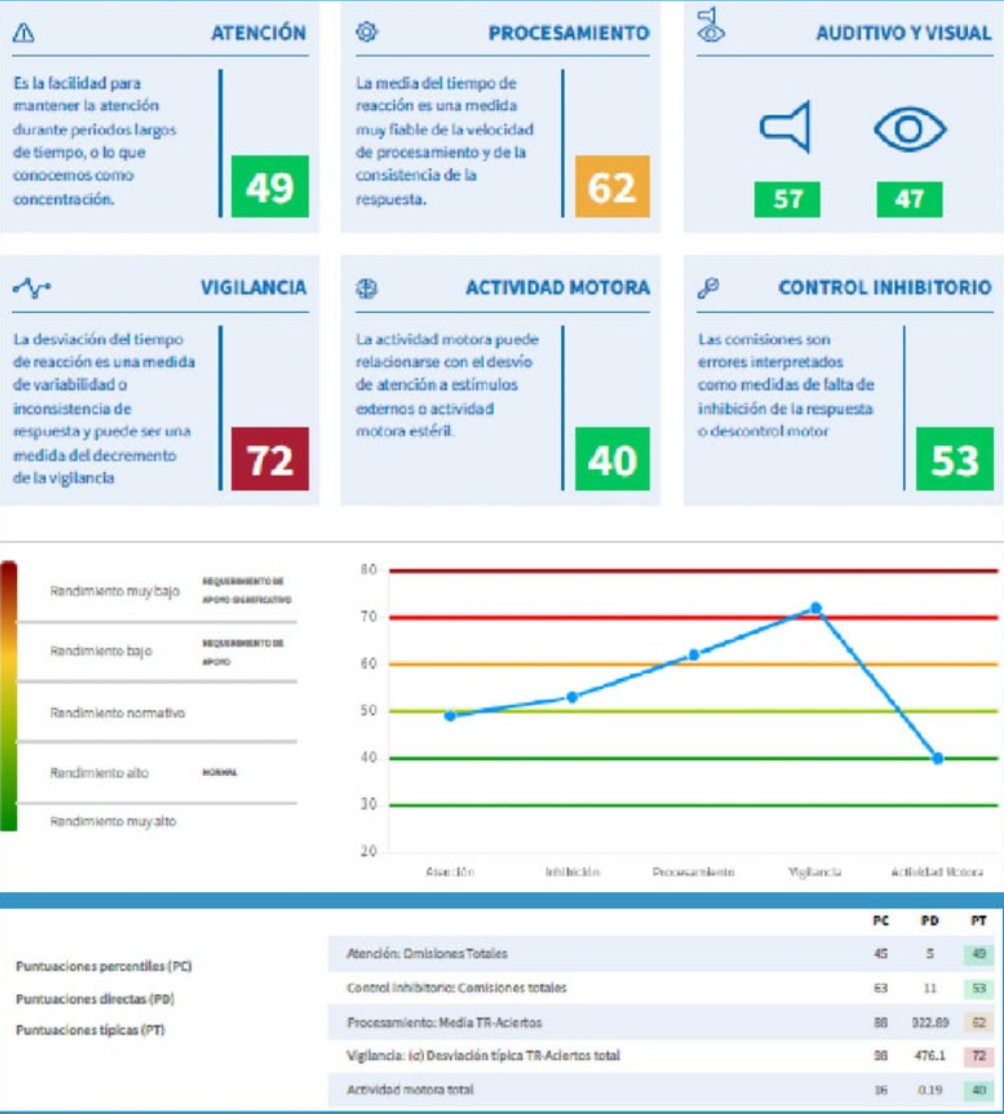
An initial assessment was conducted using Nesplora Attention Kids Aula, which allowed clinicians to assess her attentional functioning in an ecologically valid environment. The results revealed a profile characterized by attentional difficulties together with significantly increased motor activity.
Based on these findings, pharmacological treatment was initiated, and a follow-up plan was established using periodic assessments with Nesplora Attention Kids Aula. From the early stages of the intervention, significant improvements were observed in the patient’s functioning, including progressive gains in academic performance and self-esteem.
Over the six years of follow-up, the patient received pharmacological treatment intermittently, with medication adjusted according to academic demands and her clinical progression. In addition, she received continuous psychoeducational support.
The continued use of Nesplora Attention Kids Aula made it possible to make precise adjustments to both medication and therapeutic interventions, as well as to the planning of extracurricular activities, adapting each decision to the changes observed throughout her development.
The most recent assessment showed a very positive outcome, with a marked improvement in both attentional and behavioral indicators.
Nesplora Aula assessment without medication in early 2025
Nesplora Aula assessment in late 2025, showing significant improvement
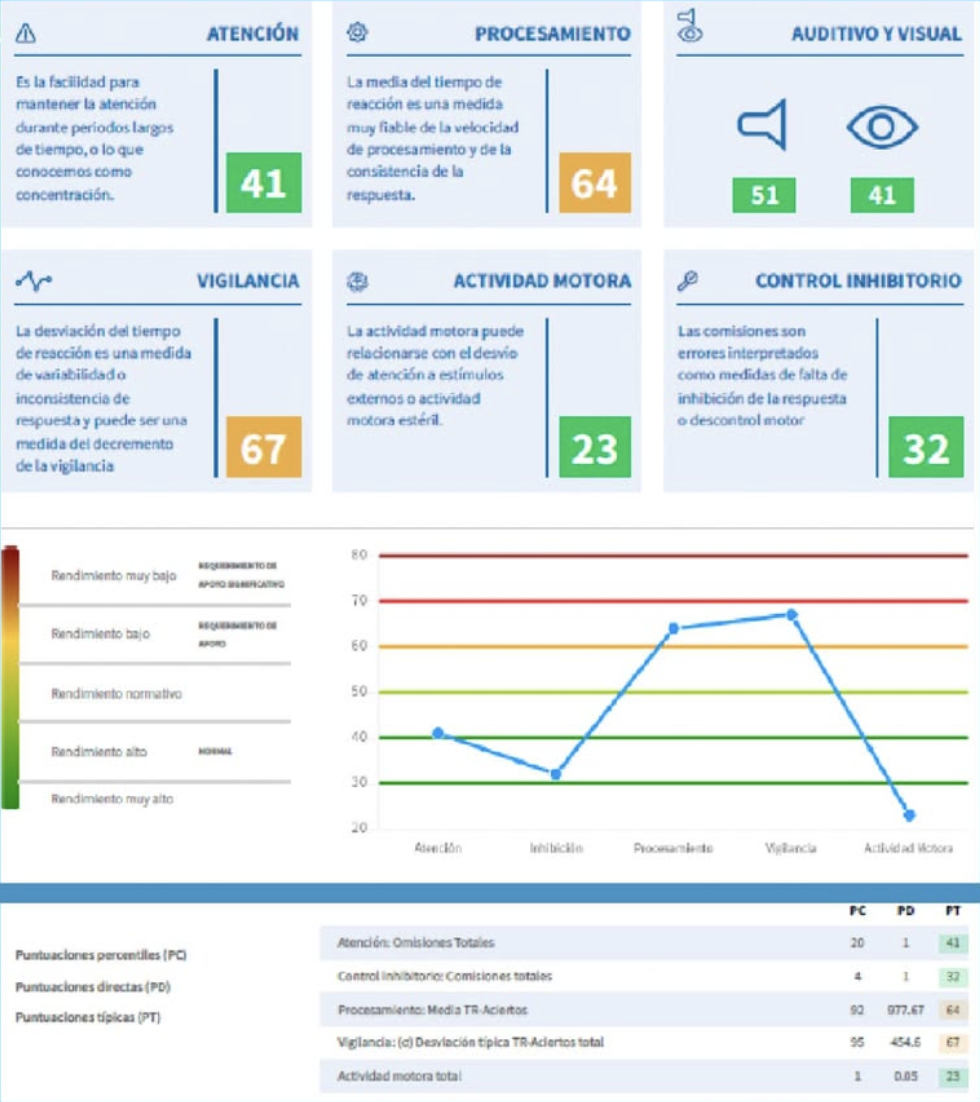
This case highlights the importance of having objective assessment tools not only for the initial assessment, but also for long-term clinical follow-up and therapeutic decision-making in ADHD. Nesplora’s tools support the diagnostic process and, above all, optimize clinical management over time by facilitating interventions that are more closely tailored to each patient’s individual needs.
(Case presented by Dr. Santiago Peralta, Pediatric Neurologist at Corporación Monte Sinaí, Cuenca, Ecuador).
Case 5: diagnostic confirmation through a multimethod assessment
Pedro, a ten-year-old boy, was referred for assessment with suspected ADHD. A comprehensive neuropsychological evaluation was planned to define his intellectual and executive functioning profile. Traditional neuropsychological tests were administered alongside Nesplora assessments, providing a more comprehensive view of his cognitive abilities.
The results confirmed the presence of attentional and executive difficulties, including reduced cognitive flexibility, impaired inhibitory control, and planning deficits. Integrating the findings from both traditional assessments and Nesplora Attention Kids Aula and Nesplora Ice Cream made it possible to establish a diagnosis of ADHD with a predominantly executive profile.
In this case, the combined use of different assessment methods not only facilitated the diagnostic process but also increased confidence in the clinical interpretation.
(Case presented by Sinapsi Neuropsicología)
Case 6: attentional and language difficulties in an eight-year-old boy
This case involves an eight-year-old boy presenting with language difficulties, particularly rhotacism (difficulty pronouncing the /r/ sound), as well as articulation problems affecting other phonemes. His parents also reported poor attention, although his mother denied the presence of impulsive or hyperactive behaviors. Relevant background information included a family history of simple language delay, and the mother described herself as being highly distractible.
Academically, the child was in the third grade and demonstrated average performance, which contrasted with his parents’ perception that he was “very intelligent.” This led the clinician to consider the possibility of a neurodevelopmental disorder, particularly ADHD, taking into account that some children with high cognitive abilities may underperform academically because of previously undetected attentional difficulties. An unstable family environment due to parental separation was also noted.
Motor development was largely within normal limits, although there was a significant delay in language development, with the first two-word utterances appearing at around two years of age. During early childhood, he had been diagnosed with a mild psychomotor developmental delay and received speech-language therapy. An electroencephalogram (EEG) performed at the age of five showed bifrontal slowing, although the findings were not considered conclusive.
During the clinical evaluation, the SNAP-IV rating scale was administered to assess ADHD symptoms. The results revealed a marked discrepancy between the parents’ reports: the mother did not perceive significant attentional difficulties, whereas the father described clear symptoms of inattention, impulsivity, and hyperactivity above the established clinical cutoffs. Teacher reports were not yet available, making it difficult to complete the usual multimodal assessment.
This case illustrates the importance of combining clinical history, behavioral rating scales, and complementary tools such as virtual reality-based assessments. These tools can facilitate the objective identification of attentional and executive difficulties without replacing the clinical diagnosis, while helping to reduce delays in the identification and treatment of possible neurodevelopmental disorders.
(Case presented by Dr. Manuel Padilla)
Case 7: a 12-year-old adolescent with academic difficulties and mild ADHD identified through a multimodal assessment
This case involves a 12-year-old girl who presented with poor academic performance and difficulties in reading and writing. Her mother reported that she had good social skills and believed that her academic difficulties had been successfully compensated for through private tutoring, without the need for previous assessments or concerns raised by the school.
In the initial questionnaires, the parents did not report significant symptoms of inattention, hyperactivity, or impulsivity, and the family chose not to involve the school in the assessment process. Traditional neuropsychological tests showed borderline performance on attention tasks, although the results were not conclusive.
To complement the assessment, the clinical team incorporated Nesplora’s virtual reality tools, using Nesplora Attention Kids Aula and Nesplora Ice Cream. The results revealed difficulties in inhibitory control, distractibility, and working memory, producing a profile consistent with mild ADHD.
This case highlights the value of virtual reality tools as an objective and ecologically valid complement to neuropsychological assessment, particularly when there is limited awareness of symptoms or discrepancies in the information provided by family members.
(Case presented by Cristina Martell Siqueiros, Neuropsychologist and President of the Mexican Association of Neuropsychology, and Sandra Meza, Neuropsychologist, Lecturer, and Director of Darana Center)
Case 8: attentional and inhibitory control difficulties in an adolescent with neurofibromatosis
This case involves an adolescent diagnosed with neurofibromatosis who was initially assessed using traditional cognitive tests, including the WISC-V. The results showed low processing speed scores, which initially suggested generalized difficulties in this domain.
However, after complementing the evaluation with Nesplora’s assessment tools, the analysis revealed a much more specific profile. The results indicated that processing speed and vigilance were preserved, whereas the primary difficulties were found in selective attention and inhibitory control.
The assessment also made it possible to differentiate the impact of the motor impairments associated with neurofibromatosis—particularly those affecting fine motor skills—from the patient’s actual attentional and executive difficulties. In this way, the virtual reality assessments provided more precise information about the origin of the observed difficulties and helped avoid incomplete interpretations based solely on traditional tests.
(Case presented by Florencia Sierra, Educational Psychologist specializing in Neurocognitive Assessment)
The cases presented share one common element: the need to look beyond normative scores in order to understand the patient’s real-world functioning.
Neuropsychological assessment should not be limited to obtaining test scores. Instead, it should aim to build a coherent clinical profile by integrating quantitative and qualitative data gathered in contexts that reflect the individual’s everyday life.
In this regard, the incorporation of Nesplora’s assessment tools, which enable assessment in ecologically valid environments using objective and sensitive measures, represents a significant advancement in clinical practice.
In addition, these cases highlight several key points:
- The existence of atypical profiles that may go undetected in conventional assessments.
- The importance of context in the expression of cognitive difficulties.
- The value of longitudinal follow-up in clinical decision-making.
- The need to interpret assessment results from an individualized perspective.
Ultimately, an effective neuropsychological assessment is not one that simply classifies patients, but one that enables clinicians to understand, guide, and intervene in a way that is tailored to each individual’s needs.